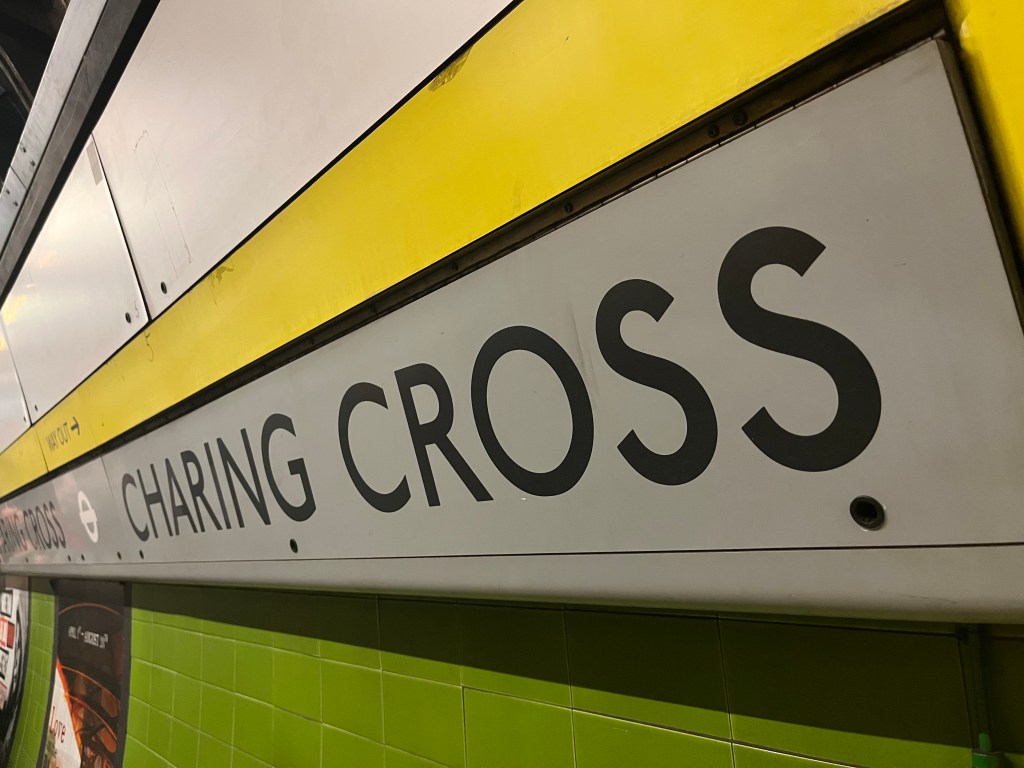
Last week I had the opportunity to go on a Hidden London tour of Charing Cross Underground Station. These are organised tours for small group to explore parts of the underground network we tend not to think about. It’s a fascinating look into how areas are repurposed as the network continuously evolves.

The first stop was through an unassuming door into an escalator shaft to the Jubilee Line. The line originally terminated at Charing Cross but when it was extended in the 1990s to serve the redeveloped Docklands it was redirected so trains no longer stop at Charing Cross. Unless due to an error a busy train is sent the wrong way leading to lots of confused passengers!
The track is still permanently electrified, and the station can be used as a siding to park extra trains during busy events. It also provides a perfect space for Transport for London to test out new features before using them in “live” stations. Because it’s still a fully working platform it also provides a realistic space for training staff and emergency services. Finally, it’s also made appearances in several films, including Skyfall and Thor: The Dark World. Unfortunately, due to a blunder in the latter where Thor is told that it is two stops from Charing Cross to Greenwich the credibility of the film is ruined. Honestly, I’m not even sure if we can believe that a Norse god would be travelling around London in the first place!
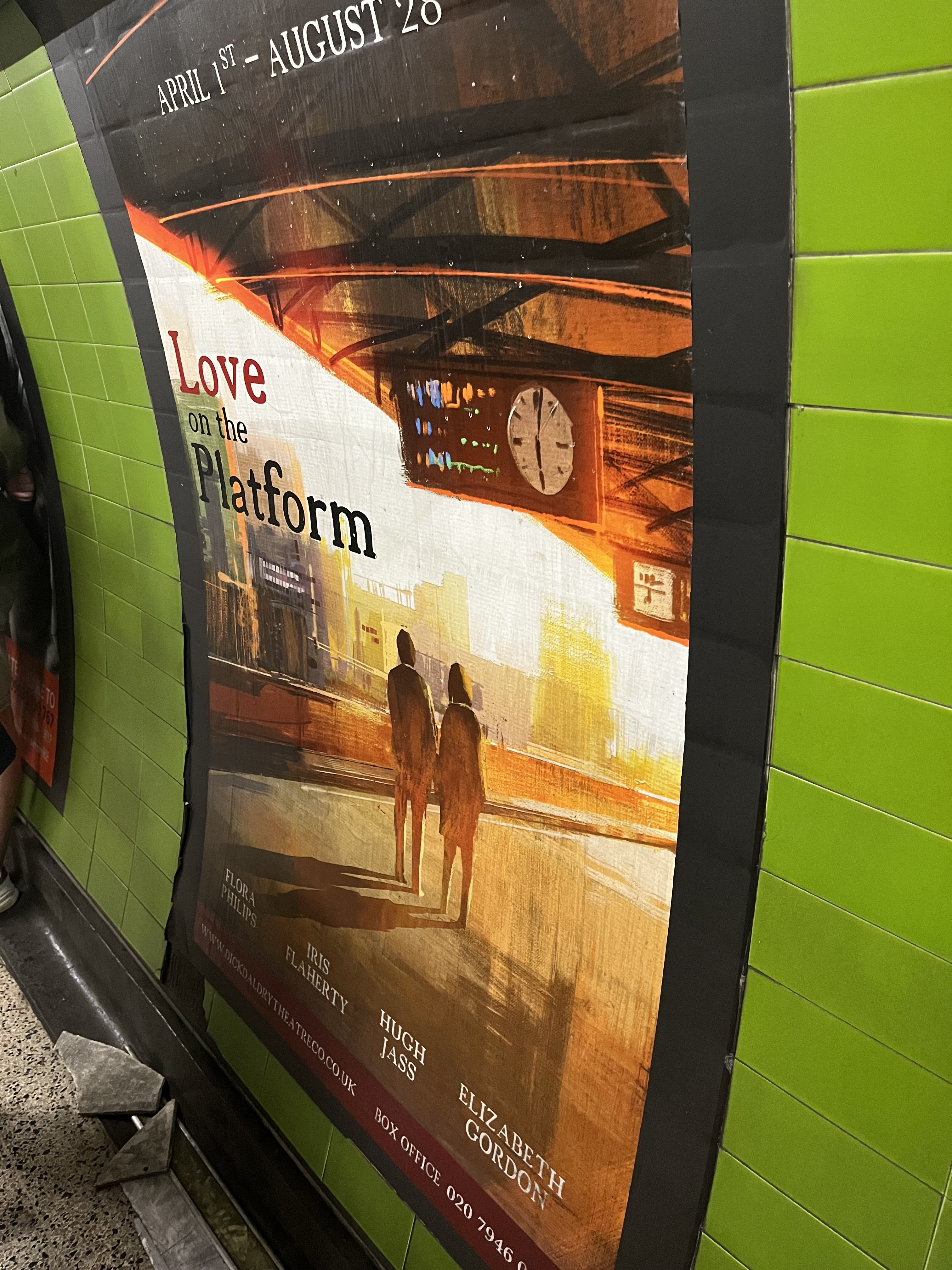
The platform looks perfectly ordinary, except all the posters are fake – at a glance they look fairly normal but there are clues in the details.
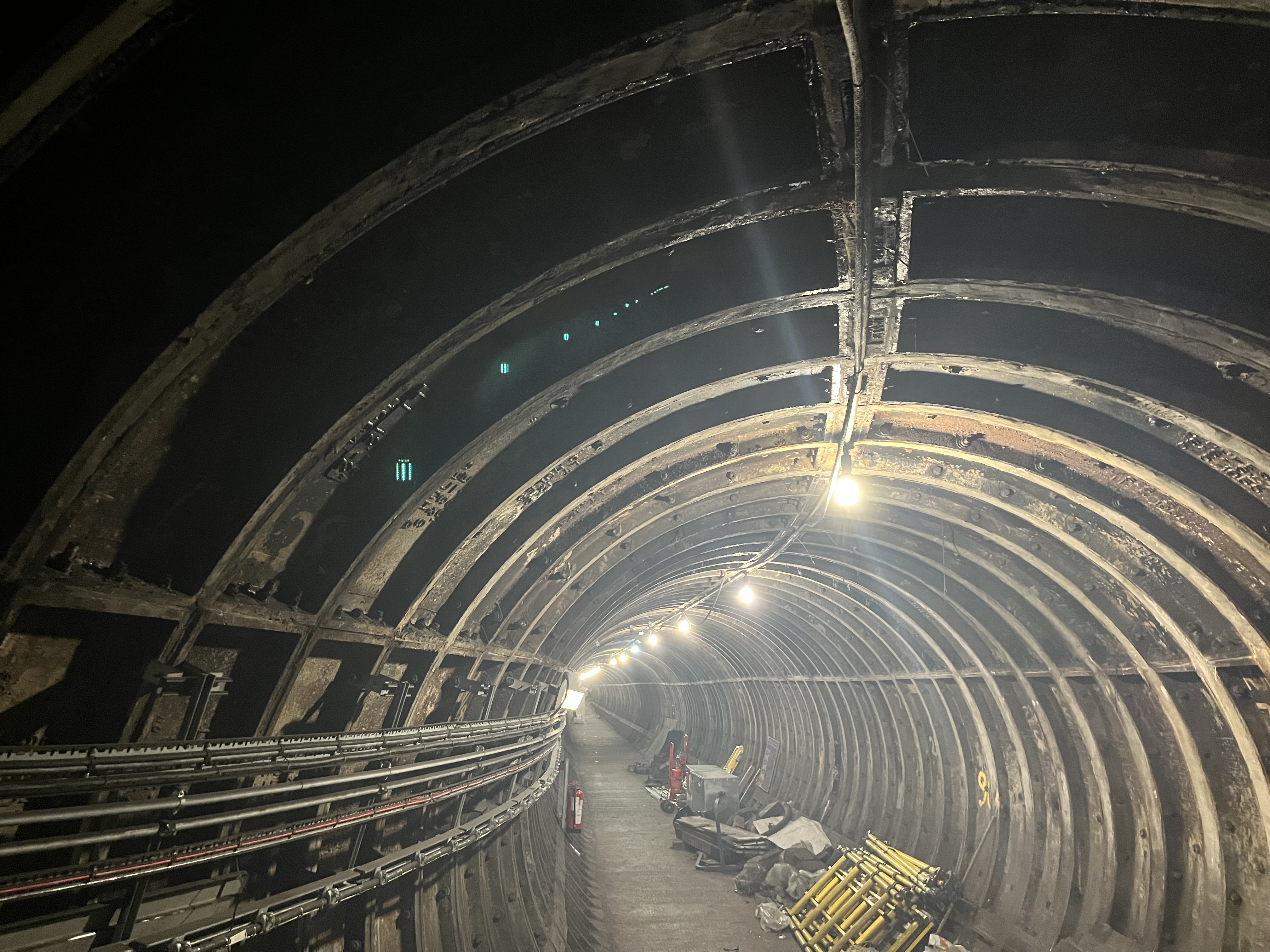
The next stop was to a different part of the station to see how the Jubilee Line was built. There is a long construction tunnel which runs all the way under Trafalgar Square to the construction site which is now the Sainsbury Wing of the National Gallery. Spoil from the tunnels was transported via carts and extracted from here – enough to fill hundreds of Olympic sized swimming pools. Because of the proximity to the foundations for Nelson’s Column the tunnel had to be built in a curve so as not to cause any movement. We were shown how many of the metal panels lining the tunnel were left over from the Victoria Line which was built in the previous decade. None of these underground spaces go unused, and the tunnel is now used to store spare equipment and material for making repairs.
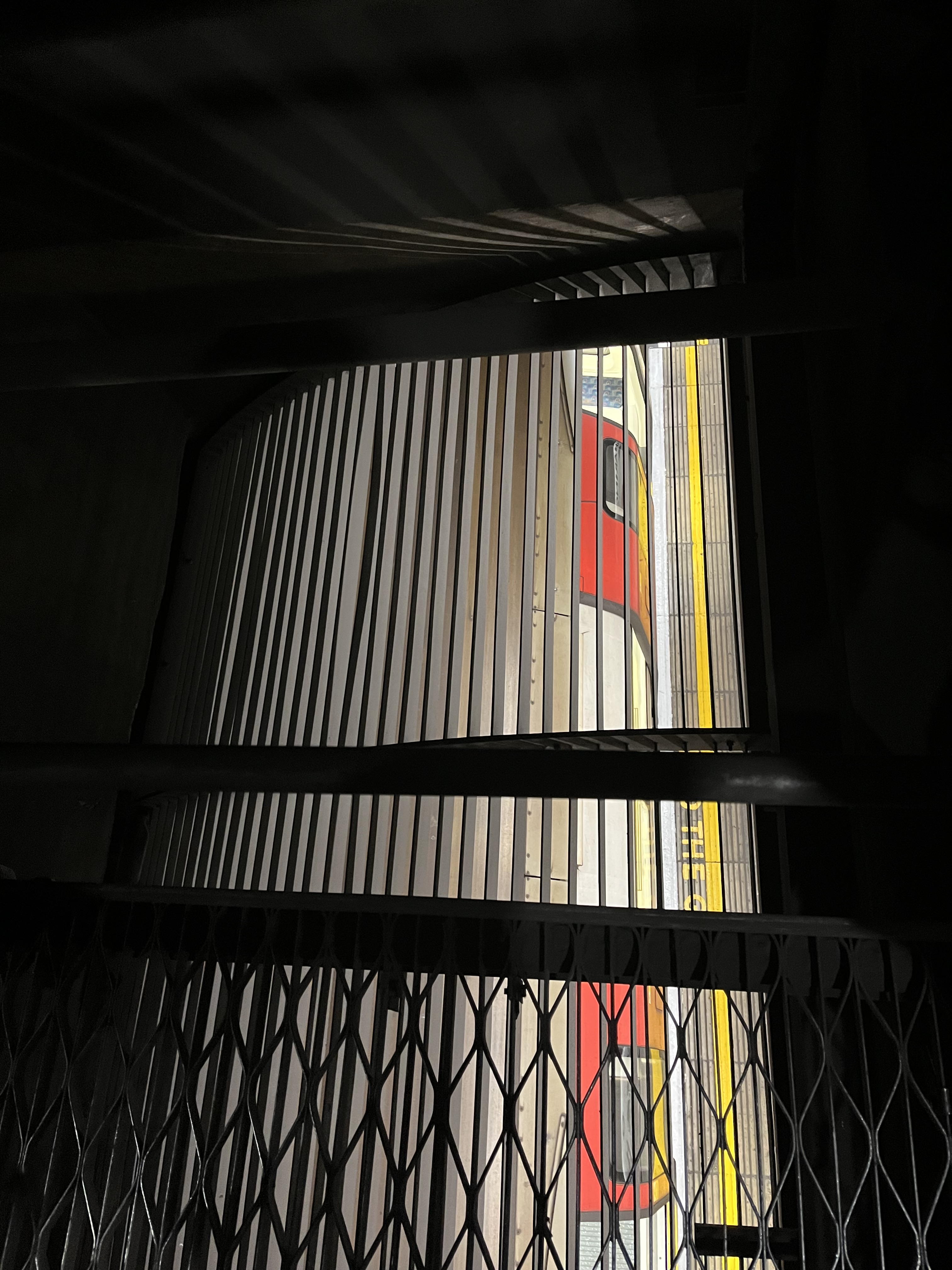
The final section of the tour was to look at the ventilation shafts. It seems utterly mad that ventilation was not really thought of when the original tube lines were built. One thing which the Jubilee Line brought was dedicated ventilation tunnels to all the lines at the stations it passed through. We were shown where the exhaust air was released from a rather unassuming building just around the corner from Charing Cross mainline station. At the other end we were shown where the vents were placed above the Northern Line platform, and we could watch trains pull in and the doors open and close. Again, you can see James Bond running through some of this during Skyfall.
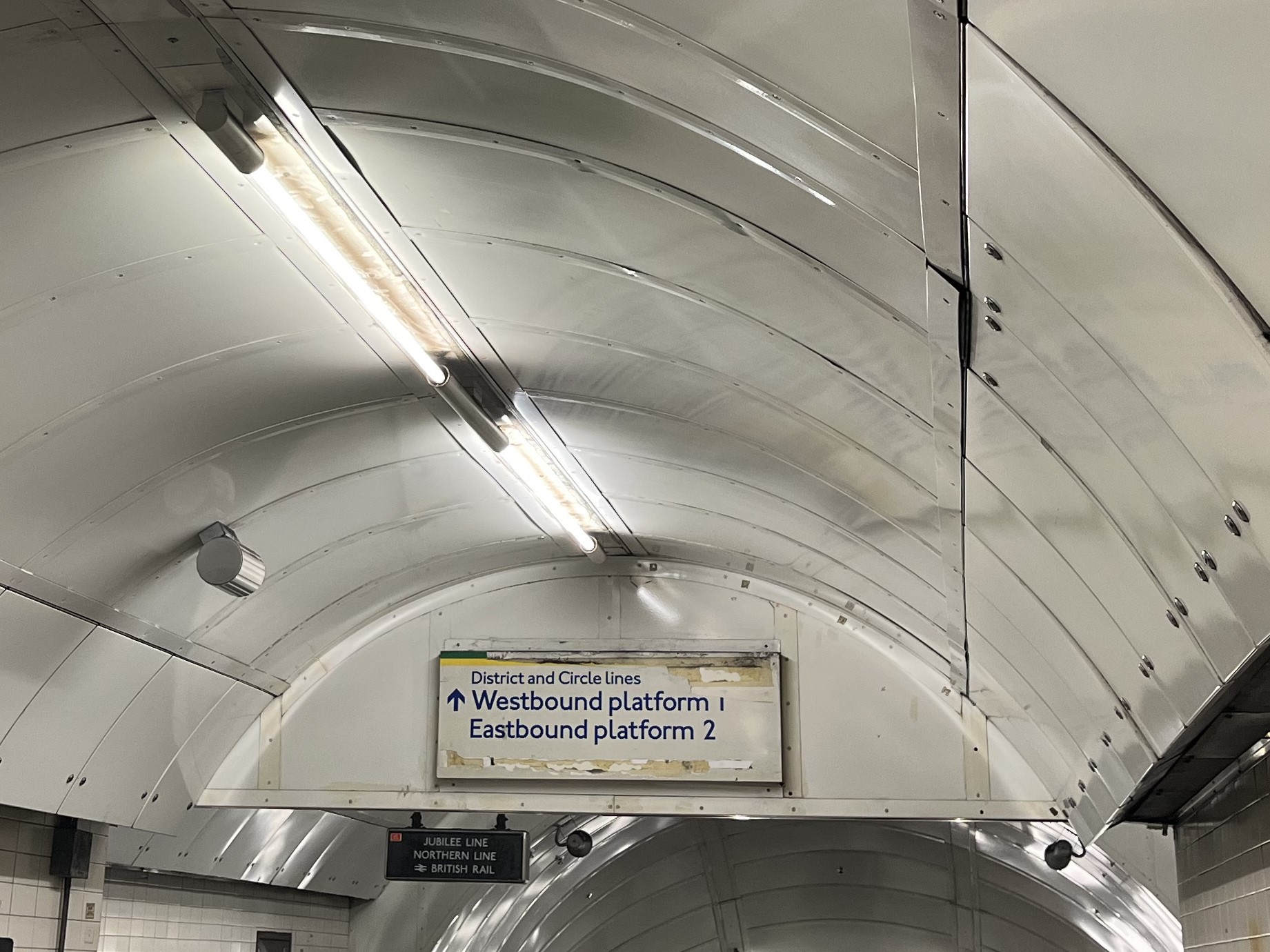
Filming in the station must have been fascinating to watch, they had to bring down hundreds of extras, some of the heavy equipment had to be brought in via train. Skyfall was filmed here over 5 months and the result is about 10 minutes of the film. There are a few clues left behind, including a fake District and Circle Line sign and removal of the “Toblerones” between the escalators to allow Javier Bardem and Daniel Craig to slide down them.
There can’t be many days out which combine history, trains, geology, civil engineering and behind-the-scenes film tours. If you are interested in one or more of these I would highly recommend the tours as something a bit out of the ordinary to do in London!
 In The Hand Ltd